Why Python Is Worth Learning Right Now
Python remains a strong programming choice in 2026 because its usefulness extends far beyond beginner-level scripting. The official Python documentation highlights its use for scripting, rapid application development, and integration with a wide range of platforms, while Python.org lists web development among its established application areas.
The demand is also reflected in developer data. Stack Overflow’s 2025 Developer Survey, based on more than 49,000 responses from 177 countries, reported a 7-percentage-point increase in Python adoption from 2024 to 2025, linking its growth particularly to AI, data science, and backend development.
For beginners, this versatility is valuable. You can start with Python fundamentals and later move toward web development, automation, data analysis, machine learning, or AI without abandoning the language. Python’s relatively readable syntax also makes it approachable for people entering programming for the first time.
That combination of accessibility, broad applications, and continued adoption makes Python a practical foundation for students, career switchers, and aspiring technology professionals.
What to Look for in a Python Institute
Not every institute that lists "Python training" on its website delivers the same thing, so it's worth knowing what actually separates a good program from a certificate mill before you enroll.
| What to Check | Why It Matters |
| Trainer background | Someone who's written production code, not just taught from slides |
| Project-based curriculum | Portfolio projects matter more to recruiters than a syllabus checklist |
| Tool coverage | Should include real tools like VS Code, Jupyter, GitHub — not just theory |
| Placement support | Mock interviews, resume help, and referrals, not just a job board link |
| Batch size | Small batches mean you actually get doubt-clearing time |
What You’ll Learn in the Python Course
The course is designed to take learners from Python basics to practical application development, with a strong focus on coding practice, projects, and problem-solving.
Python Fundamentals
You start with the core concepts required to write Python programs, including variables, data types, operators, conditional statements, loops, functions, and basic error handling. This stage builds the programming logic needed for more advanced topics.
File Handling and Python Libraries
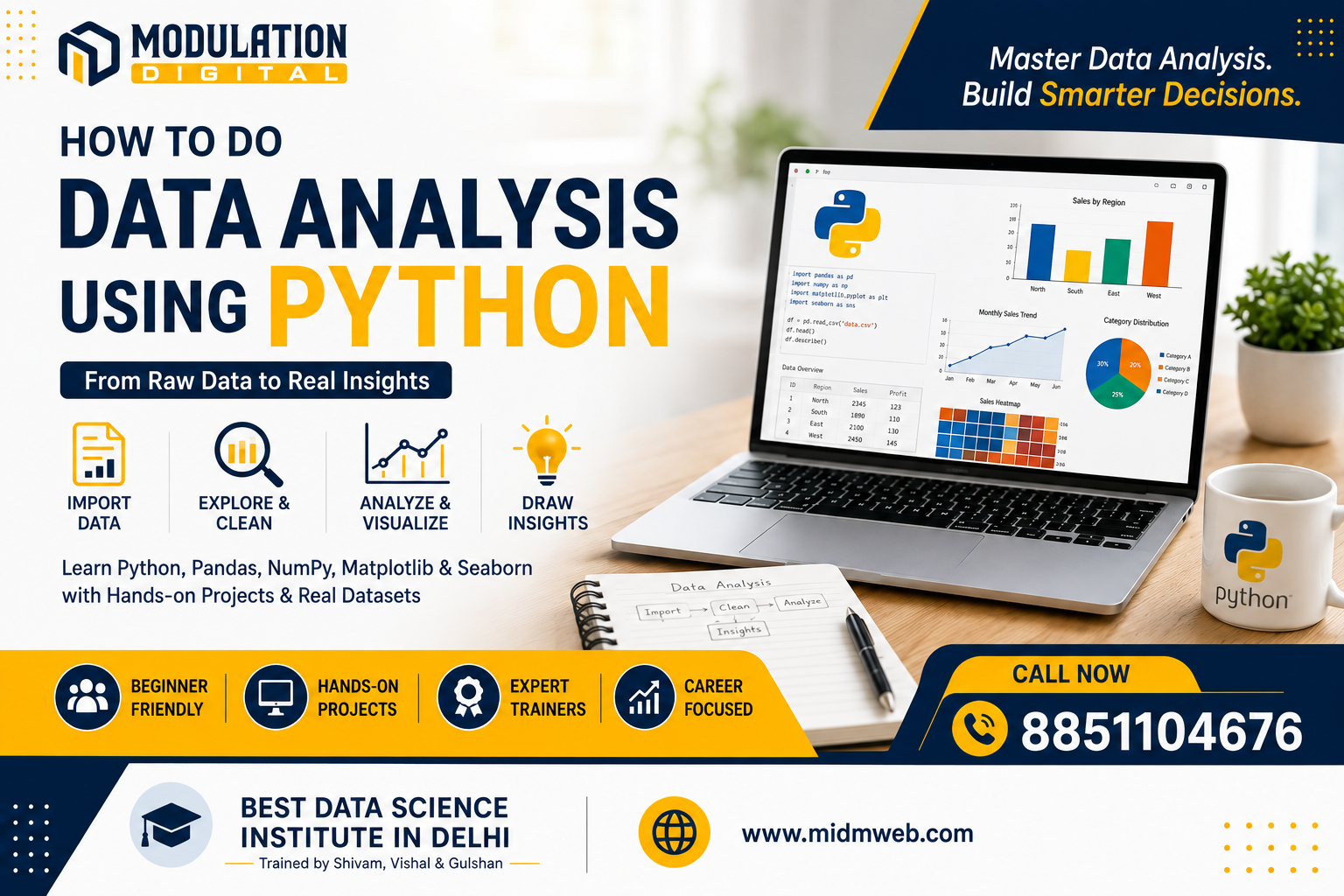
Once the fundamentals are clear, the curriculum moves into file handling and commonly used Python libraries. You learn how to read, write, and manage data while working with tools such as NumPy and Pandas for data manipulation and analysis.
Data Visualization
The course introduces Matplotlib to help learners turn processed data into meaningful visual representations. You practise creating charts and basic visualizations that can be useful in analytical and business applications.
Web Development with Flask and Django
You also explore Python for web development through Flask and Django. The training introduces application structure, routing, forms, and other essential concepts required to develop functional web applications.
APIs and Application Integration
Another important component is API integration. You learn how applications communicate with external services and exchange data, helping you understand how modern software systems connect with one another.
Practical Projects
Instead of limiting learning to theoretical exercises, the course includes hands-on projects such as data dashboards, automation tools, and basic web applications. These projects help learners apply multiple concepts together and create practical work that can be presented during internships or job applications.
Flexible Learning Options
Students can choose between classroom training, live online classes, or recorded sessions with live doubt-clearing support, making it easier to continue learning according to their schedule and preferred learning style.
Trainers and Mentorship
The trainers behind this course have real industry backgrounds — people who've written and shipped code in actual teams, not just taught from a fixed slide deck. That distinction shows up in how doubts get answered: instead of a textbook definition, you get context on why a particular approach is used in production, what mistakes are common, and how to debug when something breaks. Mentorship continues beyond scheduled class hours too, with support for project reviews and interview preparation as you get closer to applying for roles.
Career Paths After Learning Python
Finishing a Python course opens up a genuinely wide set of entry points, which is part of why it's such a practical first language to learn. At the entry level, you can move into roles like Python Developer, Automation Engineer, or Junior Data Analyst — positions built around coding, scripting, and basic data handling that are realistic targets for freshers or professionals transitioning from non-technical roles. With more experience or a specialization layered on top, roles like Backend Developer, Data Scientist, and AI/ML Engineer become achievable, and these are in steady demand across fintech, healthcare, e-commerce, and general SaaS companies. Freelancing is a real option too — platforms like Upwork and Fiverr regularly list Python work around automation scripts, data scraping, and small web projects, which is a common way learners start earning while still building experience toward a full-time role.
Why Choose This Python Training Program?
Choosing a Python programming institute in Laxmi Nagar should be based on more than the course title or list of technologies. What matters is whether the training provides enough opportunities to practise coding, work on practical projects, clear doubts, and understand how Python is applied beyond classroom exercises. Modulation Digital combines structured instruction with hands-on programming activities, helping learners progress from Python fundamentals toward practical applications.
The course is led by Roshan Jha, with training covering areas such as Python fundamentals, NumPy, Pandas, Matplotlib, file handling, Flask, Django, APIs, and application development. Students can also work on projects such as data dashboards, automation tools, and basic web applications, allowing them to apply multiple concepts while developing practical programming skills.
Other aspects of the learning experience include:
- Live coding and practical project work
- Small-batch learning and doubt-clearing support
- Classroom and live online learning options
- Recorded sessions for revision
- Practical project development
- Portfolio-building opportunities
- Resume and interview guidance
- Placement and career assistance
For anyone comparing a Python programming course in Delhi NCR, these factors can help determine whether the training matches their learning style, current skill level, schedule, and career objectives. Rather than choosing a course simply because it lists Python technologies, evaluate the trainer's expertise, practical exposure, project work, learning support, and career assistance. With guidance from Roshan Sir and a practical learning approach at Modulation Digital, students can focus on developing the coding confidence needed to use Python beyond the classroom.
FAQs
How long does it take to complete a Python course?
Most Python courses run 2 to 4 months, depending on the training mode — regular, weekend, or fast-track — and whether advanced modules like Django or data analysis are included.
Do I need coding experience to join?
No. The course is designed for complete beginners as well as intermediate learners, and only assumes basic computer familiarity to start.
Will I get a certificate after finishing the course?
Yes, you receive a completion certificate that you can add to your resume and job applications.
Is placement support included?
Yes. Support includes resume building, mock interviews, and job or internship referrals through the institute's placement network.
What tools and libraries does the course cover?
You'll work with VS Code, Jupyter Notebook, GitHub, and Google Colab, along with NumPy, Pandas, Matplotlib, Flask, and Django.
Can working professionals join without quitting their job?
Yes — the weekend batch format is designed specifically for working professionals, covering the same curriculum across weekend sessions instead of daily classes.
What's the difference between the classroom and online batches?
Both cover the same curriculum and projects; the classroom batch is held in Laxmi Nagar, while the online batch is fully live and interactive, with recorded sessions available for revision.
What can I do immediately after completing the course?
Graduates typically move into entry-level roles like Python Developer, Junior Data Analyst, or Automation Engineer, or take on freelance Python projects while building further experience.
Is Python enough on its own, or do I need to learn other languages too?
Python alone is enough to start a career in development, automation, or data analysis. Many learners add SQL or a data visualization tool later as they specialize.
How is this course different from free YouTube tutorials?
Free tutorials cover syntax but rarely include structured projects, doubt-clearing with a mentor, or placement support — the three things that actually determine whether a skill becomes a job.
Where is the Laxmi Nagar training center located?
The center is at D-126, Laxmi Nagar, Metro Station Gate No-5, Delhi-92, with online batches available for students outside Delhi.
NCR.
Conclusion
Learning Python is not about collecting another certificate or memorising a list of programming commands. The real value comes from being able to write code, solve problems, work with data, build applications, and understand how different tools fit together. That is why choosing the right training environment matters as much as choosing the language itself.
For students searching for the best Python programming institute in Laxmi Nagar, the strongest option is one that combines structured learning with consistent practice. A useful program should give you opportunities to work with Python libraries, APIs, data, web frameworks, and practical projects while also providing guidance when you encounter errors or difficult concepts.
The learning path does not have to end with Python fundamentals either. Once you have a solid base, you can specialise in areas such as backend development, automation, data analytics, machine learning, or AI, depending on your interests and career goals.
Before enrolling, compare institutes on the things that genuinely affect outcomes: trainer expertise, project exposure, batch size, practical coding time, learning flexibility, doubt support, and career assistance. The right course should not simply teach you Python; it should help you become confident enough to use it independently.
If you are ready to move from watching tutorials to actually building with Python, a practical, project-focused learning approach can give you a much stronger starting point for your technology career.