What Digital Marketing Actually Involves
"digital marketing" is really an umbrella term covering several distinct disciplines that happen to share a goal: getting a business found, trusted, and chosen online. In practice, that breaks down into a few core areas.
Search Engine Optimization (SEO) focuses on getting a website to rank well in organic search results — the unpaid listings people see when they search Google. It's slower to show results than paid advertising but tends to be more durable once it works.
Search Engine Marketing (SEM) and paid ads cover platforms like Google Ads, where businesses pay for visibility rather than earning it organically. This is faster but requires ongoing budget and careful campaign management to avoid wasting money.
Social media marketing involves building a brand's presence and engagement across platforms like Instagram, LinkedIn, or Facebook — a mix of content creation, community management, and increasingly, paid social campaigns.
Content marketing creates material — blog posts, videos, guides — that draws an audience in on its own merit rather than interrupting them with an ad.
Email marketing remains one of the highest-return channels available, used for everything from nurturing leads to retaining existing customers.
Most digital marketers specialize in one or two of these areas rather than mastering all equally, though a working understanding of each tends to make someone more effective even within a specialization.
Why Digital Marketing Is Growing in India: 46% of Ad Spend Is Now Digital
digital marketing is becoming increasingly important because Indian consumers and businesses are spending more of their time and money online. This is reflected in advertising data, not just industry predictions. According to Crisil Intelligence, digital media accounted for nearly 46% of India's total advertising expenditure in FY2025, almost double its 24% share in FY2020. The report also expects digital advertising to grow by another 9–11% in 2025.
The wider outlook is equally significant. A 2026 industry update reported by IBEF says India's digital advertising market is projected to reach approximately US$22 billion by 2030, supported by smartphone usage, internet adoption, social media, video platforms, e-commerce, and AI-powered advertising.
For businesses in Delhi and across India, this creates opportunities for professionals who can manage SEO, paid advertising, social media, content marketing, email campaigns, analytics, and conversion optimization. digital marketing skills can lead to roles in agencies, in-house marketing teams, startups, e-commerce companies, or freelance consulting.
However, the industry changes quickly. Search algorithms, advertising platforms, consumer behavior, analytics tools, and AI capabilities continue to evolve. Therefore, a successful digital marketer needs more than a certificate — they need current practical skills, analytical thinking, experimentation, and the ability to connect marketing activity with measurable business results.
The Skills That Actually Matter
Regardless of which specialization someone eventually leans toward, a few foundational skills come up across nearly every digital marketing role:
Analytics literacy. Tools like Google Analytics show what's actually working, not just what feels like it should be — arguably the single most transferable skill in the field.
Basic SEO understanding. Even marketers who don't specialize in SEO benefit from knowing how search engines evaluate content, since it affects nearly every other channel indirectly.
Ad platform familiarity. Practical experience running campaigns on Google Ads or Meta Ads — budgeting, targeting, reading performance data — is something employers consistently look for.
Content and copywriting basics. Whether it's a social caption, an email subject line, or an ad headline, writing clearly and persuasively underlies almost every channel.
Comfort with change. Less a discrete skill and more a mindset — tools and platforms shift often enough that adaptability matters as much as any single technical skill learned today.
Digital Marketing Course Types: Duration, Syllabus & Career Benefits
| Course Type | Typical Duration | Main Topics Covered | Best For | Key Merit |
| Short-Term Course | 1–3 months | SEO, Social Media, Content Marketing, Basic Ads | Beginners exploring digital marketing | Quick introduction to the industry |
| Advanced Course | 3–6 months | SEO, Google Ads, Social Media, Content, Email, Analytics, Performance Marketing | Students and career switchers | Broader skills with more practical exposure |
| Professional Certification Program | 6+ months | SEO, PPC, Social Media, Content, Analytics, AI Tools, Campaign Management | Learners targeting digital marketing careers | Deeper training, projects, certifications, and career preparation |
| Modulation Digital Certified Program | 6 months / 320+ hours | SEO, Google Ads, Social Media, Content, Email, Analytics, Affiliate Marketing, AI & practical projects | Students, beginners, career changers, and aspiring marketers | Longer learning period + practical projects + certifications + LMS + career support |
Why the 6-Month Format Can Be More Practical
A short course can introduce the basics, but digital marketing involves multiple disciplines that require practice. Modulation Digital's 6-month, 320+ hour format provides more learning time for students to work through different channels, practise campaign-related tasks, build projects, and develop a broader understanding of digital marketing.
The key difference isn't simply the course duration. When comparing a digital marketing institute in Delhi, learners should also evaluate the syllabus depth, practical training, live projects, trainer experience, certifications, tools, portfolio development, and placement assistance.
Is a Digital Marketing Course Worth It for Students?
A digital marketing course can be worthwhile for students, but joining a course does not automatically make someone job-ready. The real value depends on what the program teaches, how much practical work it includes, and whether students get enough opportunity to apply those skills.
For a student, a structured course can be useful because digital marketing covers several different areas that can be difficult to organise independently:
- Structured Learning: Learn SEO, social media, paid advertising, content marketing, analytics, and other skills in a logical order.
- Practical Experience: Work on campaigns, websites, keyword research, content plans, advertising exercises, and performance reports instead of only watching lectures.
- Portfolio Development: Turn practical assignments and projects into evidence of what you can actually do when applying for internships or entry-level roles.
- Career Direction: Understand different career paths such as SEO Executive, Performance Marketer, Social Media Executive, Content Marketer, PPC Specialist, and digital marketing Executive.
However, students should also consider the cost, course duration, trainer experience, syllabus, practical projects, tools covered, certification, and placement assistance before enrolling. Free resources can teach many fundamentals, so paying for a course makes more sense when the program provides something difficult to replicate alone — such as trainer feedback, structured projects, accountability, live campaign exposure, and career guidance.
The smartest approach is to treat a course as a learning framework, not a shortcut to employment. Students who combine formal training with independent practice, internships, portfolio projects, and continuous learning are more likely to turn digital marketing knowledge into employable skills.
A Closer Look at Modulation Digital
For students comparing the Best digital marketing Institute in Laxmi Nagar, Modulation Digital is one option worth evaluating because its training combines classroom learning with practical digital marketing work. The institute's published programs cover major areas including SEO, Google Ads, social media marketing, content marketing, email marketing, analytics, affiliate marketing, and AI-powered marketing.
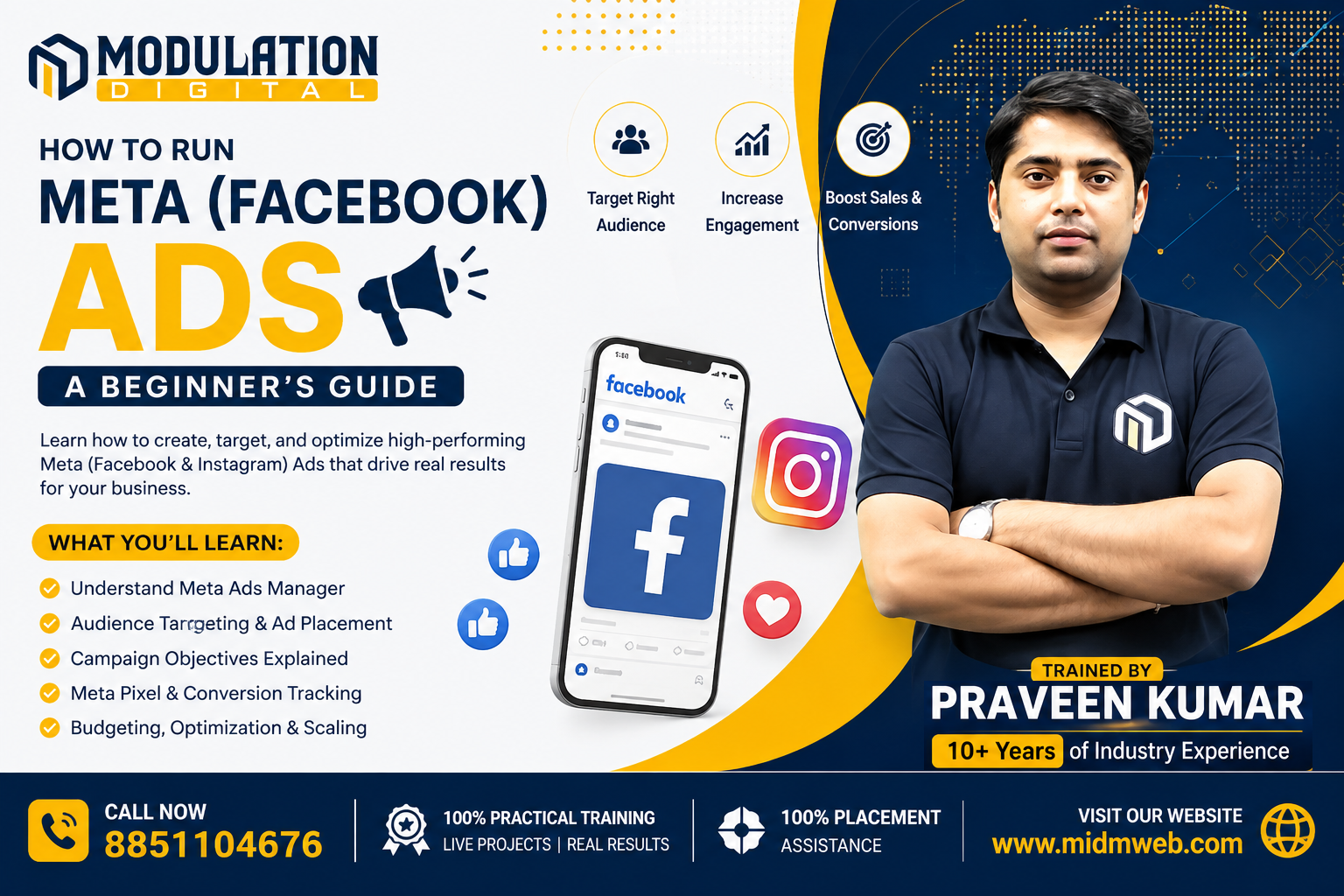
A key part of the learning experience is trainer-led practical training. Praveen Sir, associated with Modulation Digital's digital marketing training, has 10+ years of experience in digital marketing, with an emphasis on practical learning and mentorship. This type of industry exposure can be particularly useful for beginners who need help understanding how marketing strategies work beyond textbook examples.
What Students Can Gain From the Course
- Practical Learning: Live projects, case studies, assignments, and exposure to commonly used marketing tools.
- Broad Skill Development: Training across SEO, PPC, social media, content, analytics, email marketing, and newer AI applications.
- Career Preparation: Resume development, interview preparation, certifications, and placement assistance.
- Flexible Learning Support: Classroom training combined with LMS access and continued learning resources.
Student feedback is another factor worth checking before enrolling. Public reviews for Modulation Digital include positive comments about trainer support, practical teaching, and the learning environment, while the institute also publishes student testimonials describing their experiences with its trainers and courses. Reviews should be considered alongside the syllabus, trainer credentials, project work, and actual career outcomes rather than used as the sole measure of quality.
For students in East Delhi, the institute's Laxmi Nagar location can also make regular classroom attendance easier. Ultimately, the strongest reason to consider Modulation Digital is the combination of structured training, practical exposure, experienced mentorship, project work, and career support rather than simply the promise of a certificate.
FAQs
Do I Need a Marketing or Business Degree to Get Started?
No. A specific marketing or business degree isn't mandatory for entering digital marketing. Students from commerce, arts, science, management, and other backgrounds can develop relevant skills through practical learning. Employers generally care more about what you can actually do — such as SEO, content creation, campaign management, analytics, and reporting.
Which digital marketing Skill Should I Learn First?
SEO and analytics are useful starting points because they help you understand search behaviour, website performance, keywords, traffic, and measurable results. After building these fundamentals, you can explore paid advertising, social media, content marketing, email marketing, and other specializations.
How Long Does It Typically Take to Become Job-Ready?
There is no fixed timeline because it depends on your existing knowledge, learning hours, and practical experience. A beginner can build a basic foundation within a few months with consistent practice, but becoming genuinely job-ready requires projects, portfolio development, tool experience, and continuous learning.
Is digital marketing a Good Fit for Someone Without a Technical Background?
Yes. digital marketing doesn't require advanced programming for most entry-level roles. Skills such as communication, analytical thinking, creativity, research, copywriting, and strategic decision-making are often more important. Some technical knowledge becomes useful when working with analytics, tracking, websites, and advertising platforms.
Can I Freelance in digital marketing, or Is It Mostly Full-Time Work?
Both options are possible. Digital marketers can work in agencies, in-house marketing teams, startups, freelance projects, or independent consulting. Freelancing becomes more realistic once you can demonstrate useful skills through a portfolio and preferably show measurable results from previous campaigns.
What's the Difference Between SEO and SEM?
SEO (Search Engine Optimization) focuses on improving organic visibility in search results without paying for every click. SEM (Search Engine Marketing) is commonly used to describe paid search advertising, where businesses pay to appear for targeted search queries. Both can be valuable parts of a broader search marketing strategy.
Does a digital marketing Certification Actually Help With Job Applications?
A certification can demonstrate that you have completed structured training, but it shouldn't be treated as proof of professional ability by itself. A stronger application combines relevant certifications, practical projects, campaign experience, a portfolio, and measurable results.
Does Modulation Digital Offer a Trial Before Enrolling?
Modulation Digital has promoted free demo classes for prospective students, allowing them to understand the training environment before making a decision. Before enrolling, students should confirm the current demo availability, course schedule, syllabus, fees, and batch timings directly with the institute.
Conclusion
digital marketing rewards people who combine strategic thinking with a comfort for constant change — platforms shift, algorithms update, and what worked last year may need adjusting this year. That's exactly why a structured learning path, covering the core channels before specializing, tends to produce a stronger foundation than picking up scattered skills as they happen to come up.
If you're in or around East Delhi and weighing a structured path into the field, Modulation Digital's digital marketing course is worth a direct look — the free demo classes make it easy to see the teaching style before committing to anything. Whichever path you take, the field tends to favor people who start applying what they learn early rather than studying indefinitely before their first real campaign.