Defining PPC Advertising
PPC, or pay-per-click, is an online advertising model where businesses pay a fee each time someone clicks their ad, rather than paying a flat fee for ad placement. Instead of earning visibility organically over time, PPC lets businesses essentially buy immediate visibility, showing up in front of the exact audience most likely to be interested.
How Does PPC Advertising Actually Work?
Understanding the mechanics helps clarify why PPC functions the way it does:
- Advertisers bid on keywords — choosing terms relevant to their product or service
- An auction happens instantly — whenever someone searches that keyword, an automated auction determines which ads appear
- Ad rank is calculated — based on bid amount combined with ad quality and relevance, not just who pays the most
- The ad appears if it wins — shown to the searcher, typically at the top or alongside organic results
- The advertiser pays only on click — no charge occurs simply for the ad being shown, only when someone actually clicks it
Types of PPC Advertising
PPC isn't limited to just Google search results — it spans several formats:
| PPC Type | Where It Appears | Best For |
| Search Ads | Search engine results pages | Capturing active buying intent |
| Display Ads | Websites across ad networks | Building visual brand awareness |
| Shopping Ads | Search results with product images | E-commerce product visibility |
| Social Media Ads | Platforms like Facebook and Instagram | Interest and behavior-based targeting |
| Remarketing Ads | Various platforms, targeting past visitors | Re-engaging people who already showed interest |
Understanding Ad Rank and Quality Score
Winning a PPC auction isn't simply about outbidding competitors. Ad Rank is calculated using both bid amount and Quality Score, which reflects how relevant and useful an ad is expected to be to the person searching. A well-optimized ad with strong relevance can outrank a higher bid from a less relevant, poorly targeted competitor — meaning quality and relevance directly affect both visibility and cost.
How Much Does PPC Advertising Actually Cost?
Costs vary significantly depending on industry competitiveness, keyword demand, and platform. Highly competitive industries like legal services or insurance typically see much higher costs per click than less competitive niches. Rather than a single fixed price, PPC costs work more like a dynamic marketplace — the more businesses competing for the same keyword, the higher the typical cost per click becomes.
Step-by-Step Process to Run a PPC Campaign
Here's a practical sequence for setting up an effective campaign:
- Define your campaign goal — decide whether you want traffic, leads, or direct sales
- Research relevant keywords — identify terms your potential customers are actually searching for
- Set your budget and bidding strategy — decide how much you're willing to spend and how aggressively to bid
- Write compelling ad copy — create clear, relevant messaging that matches searcher intent
- Design a strong landing page — ensure the page visitors land on actually delivers on the ad's promise
- Launch and monitor closely — track early performance and make adjustments as real data comes in
- Optimize continuously — refine keywords, bids, and creative based on what's actually converting
Common PPC Mistakes Businesses Make
| Mistake | Why It Hurts |
| Ignoring negative keywords | Ads show up for irrelevant searches, wasting budget on unlikely clicks |
| Sending traffic to a generic homepage | Reduces conversion rates compared to a focused, relevant landing page |
| Setting and forgetting campaigns | Missed opportunities to fix underperforming keywords or ads early |
| Focusing only on clicks, not conversions | High traffic means little if it doesn't translate into actual results |
PPC vs SEO — How Are They Different?
PPC delivers immediate, paid visibility, while SEO builds organic rankings gradually without a direct cost per click. PPC is easier to measure precisely and control in the short term, while SEO tends to offer more sustainable, long-term value once rankings are established. Most effective digital marketing strategies use both together, leaning on PPC for quick results while SEO builds momentum over time.
About Modulation Digital
Modulation Digital is a Best Digital Marketing Institute in Delhi known for hands-on, practical training. Students set up and manage real PPC campaigns during their course, learning through actual keyword research, bidding, and performance tracking.
Meet Your Trainer – Praveen Kumar
Leading PPC and digital marketing training at this Best Digital Marketing Institute in Delhi is Praveen Kumar, who brings over 10 years of industry experience running paid campaigns across search, display, and social platforms. His approach focuses on walking students through live campaign setups, not just theory around bidding strategies.
Placement Support by Our Placement Cell
Learning digital marketing skills is only half the journey — actually getting placed in a genuine, reputed company is what matters most. This is handled by Prem, our Placement Cell (9+ years of industry experience), who works directly with hiring partners to connect students with real job opportunities once their training is complete.
Students from Modulation Digital have gone on to join well-known companies, including:
|
|
|
|
|
|
|
|
|
|
These are just a few names from our wider network of 700+ placement partners — genuine hiring companies that have actually recruited students from our courses, not just names listed for show.
Frequently Asked Questions (FAQs)
1. Is PPC advertising expensive for small businesses? Costs vary widely by industry, but small businesses often start with modest budgets and scale up as they see results.
2. How is PPC different from social media ads? Social media ads are a type of PPC, typically targeting based on interests and behavior rather than active search intent.
3. Do I only pay when someone clicks my ad? In standard PPC models, yes — you're charged per click rather than simply for the ad being displayed.
4. What is Quality Score in PPC advertising? It's a metric reflecting how relevant and useful your ad and landing page are, directly affecting both ranking and cost per click.
5. How quickly can PPC campaigns show results? Traffic can begin almost immediately after launch, though meaningful performance data usually takes a few days to accumulate.
6. Is PPC better than SEO for a new business? PPC often delivers faster initial visibility, while SEO builds more sustainable results over a longer timeframe.
7. What are negative keywords in PPC? Terms you exclude from triggering your ads, preventing irrelevant searches from wasting your ad budget.
8. Can I run PPC ads without a website? Some ad formats, like certain lead generation ads, can work without a full website, though most PPC campaigns benefit from one.
9. Is PPC advertising suitable for small local businesses? Yes, particularly with location-based targeting, PPC can help local businesses reach nearby, high-intent customers effectively.
10. What happens if my PPC budget runs out mid-day? Your ads typically stop showing until the next budget period begins, based on your platform's specific settings.
11. Do higher bids always guarantee better ad placement? No, ad quality and relevance also factor into ranking, so a lower bid with better relevance can still outperform a higher bid.
12. Can PPC campaigns target specific locations? Yes, most platforms allow precise geographic targeting, from entire countries down to specific cities or neighborhoods.
13. Is remarketing considered part of PPC advertising? Yes, remarketing is a PPC strategy specifically focused on re-engaging people who've already interacted with your website or brand.
14. How do I know if my PPC campaign is actually profitable? Tracking cost per conversion against the actual value of those conversions reveals whether a campaign is genuinely profitable.
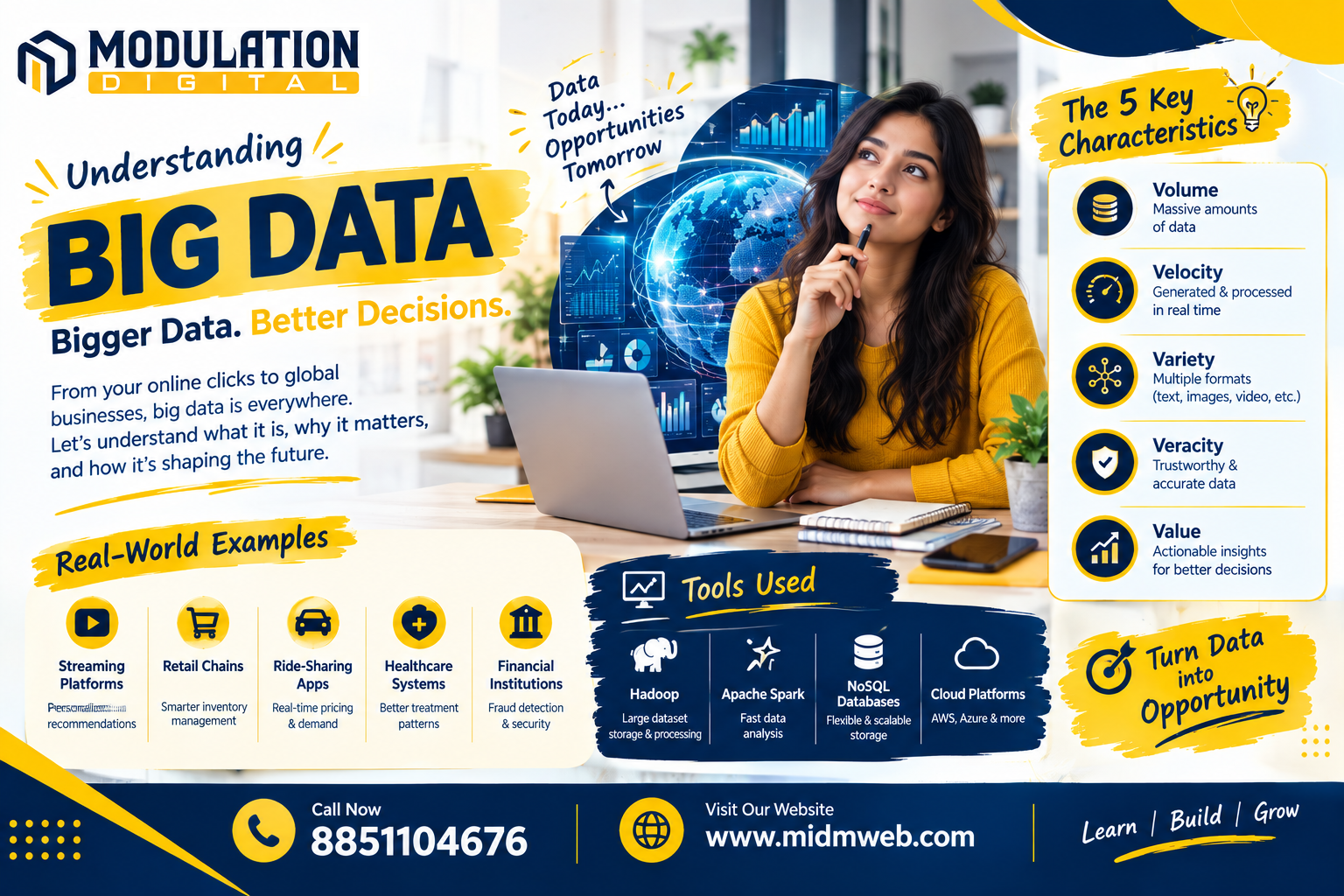
15. Once I understand paid advertising, how do I explore the massive datasets these platforms generate for deeper insights? That's covered in detail in our other guide: What is Big Data? A Beginner's Guide
Conclusion
Understanding what is ppc advertising comes down to recognizing it as an auction-driven system where relevance matters just as much as budget, rewarding well-targeted, high-quality campaigns over simply outspending competitors. Done well, it remains one of the most measurable, controllable ways to drive immediate results. If you're ready to learn this properly, Modulation Digital, a trusted Best Digital Marketing Institute in Delhi, offers hands-on training under Praveen Kumar's guidance, helping students build real, results-driven PPC campaigns. Reach out today to book a free counselling session.