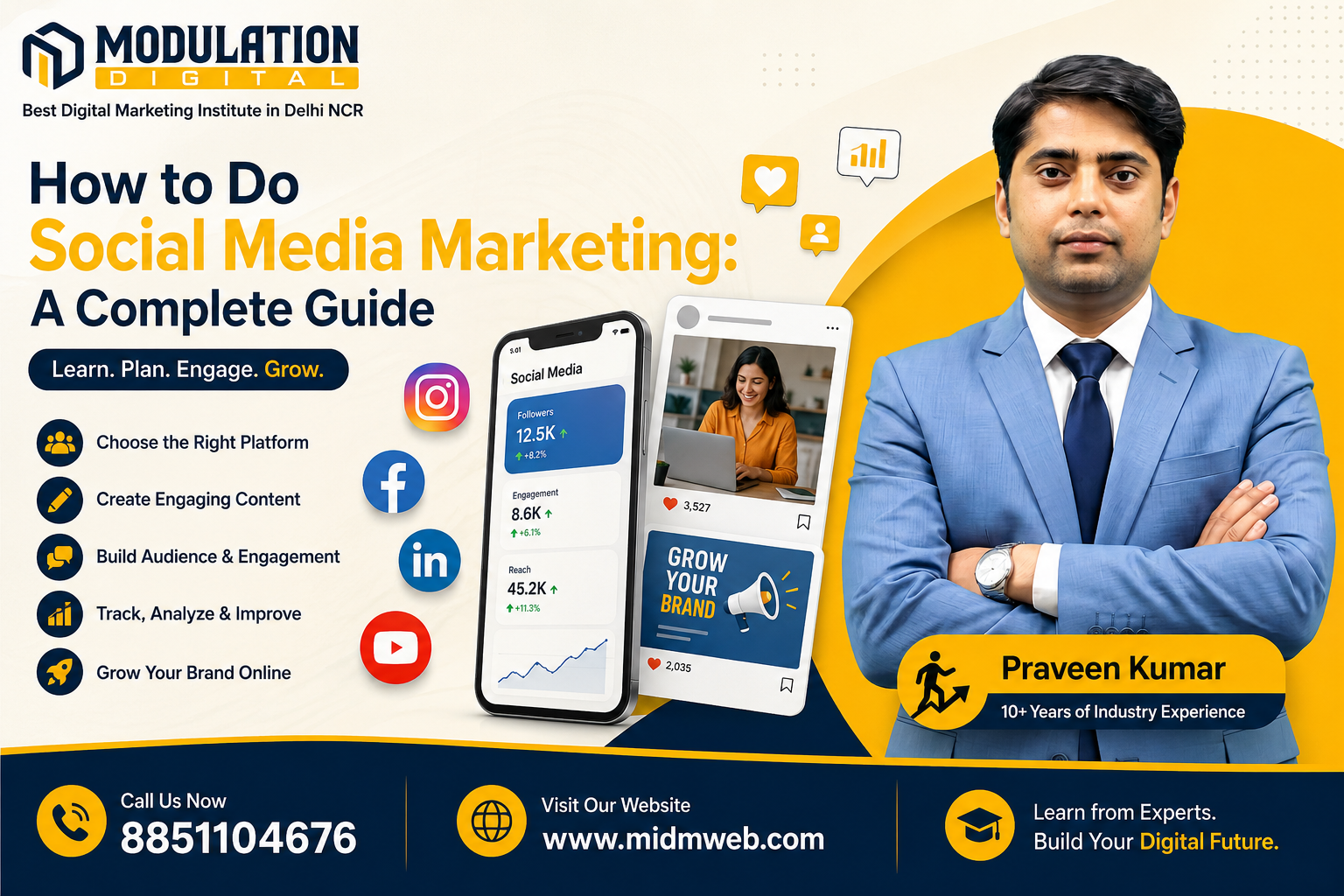
What is Social Media Marketing and Why It Matters
Social media marketing is the practice of using platforms like Instagram, Facebook, LinkedIn, and YouTube to build brand awareness, engage audiences, and drive business results. Unlike traditional advertising, it allows direct, two-way interaction with customers, making it one of the most personal and immediate ways businesses can connect with their audience today.
Choosing the Right Platform for Your Business
Not every platform suits every business — understanding audience fit matters more than being everywhere at once:
| Platform | Best For | Typical Audience |
| Visual brands, lifestyle, fashion, food | Younger, visually engaged users | |
| Community building, local businesses, broader reach | Wide, varied age demographic | |
| B2B businesses, professional services, recruitment | Working professionals, decision-makers | |
| YouTube | Educational content, tutorials, long-form storytelling | Broad audience seeking in-depth content |
Step-by-Step Process to Build a Social Media Strategy
Here's a practical sequence for building a strategy from scratch:
- Define your goal — decide whether you want brand awareness, engagement, leads, or direct sales
- Identify your target audience — understand who you're actually trying to reach
- Choose the right platforms — focus on where your audience actually spends time
- Plan a content calendar — organize what you'll post and when, rather than posting randomly
- Create and publish content — produce posts, videos, or graphics aligned with your goals
- Engage with your audience — respond to comments and messages consistently
- Review performance regularly — adjust your approach based on what's actually working
Content Types That Perform Best on Social Media
Different formats tend to serve different purposes:
- Short-form videos — highly effective for reach and engagement across most platforms
- Carousel posts — useful for step-by-step tips or breaking down information visually
- Behind-the-scenes content — builds authenticity and trust with your audience
- User-generated content — customer photos or reviews that add genuine social proof
- Educational posts — tips, how-tos, or industry insights that provide real value
Organic vs Paid Social Media — Understanding the Difference
Organic social media refers to free posts shared on your business page, relying on followers and platform algorithms for visibility. Paid social media involves running ads to reach a wider, more targeted audience beyond your existing followers. Most successful strategies use both — organic content builds trust and community over time, while paid campaigns accelerate reach and target specific business goals more directly.
How Often Should You Post? Understanding Posting Frequency
There's no single perfect number, but consistency matters more than raw volume. Posting three to five times a week on one platform, done well, usually outperforms posting daily across five platforms without real thought behind it. Quality, relevance, and consistency tend to matter far more than simply maximizing post count.
Common Social Media Marketing Mistakes Businesses Make
| Mistake | Why It Hurts |
| Posting without a clear strategy | Leads to inconsistent messaging and wasted effort |
| Ignoring audience engagement | Reduces trust and visibility, since algorithms favor interaction |
| Focusing only on follower count | Vanity metrics don't always translate into real business results |
| Using the same content across all platforms | Each platform has different audience expectations and formats |
How to Measure Whether Your Social Media Efforts Are Working
Tracking the right metrics helps separate real progress from just staying busy:
- Engagement rate — likes, comments, and shares relative to your audience size
- Reach and impressions — how many people are actually seeing your content
- Website clicks — whether social media is driving actual traffic to your site
- Conversion rate — how many social media visitors take a meaningful action, like signing up or purchasing
About Modulation Digital
Modulation Digital is a Best Digital Marketing Institute in Delhi NCR known for hands-on, practical training rather than just theory. Students build and manage real social media campaigns during their course, learning through actual content planning and performance tracking.
Meet Your Trainer – Praveen Kumar
Leading social media marketing training at this Best Digital Marketing Institute in Delhi NCR is Praveen Kumar, who brings over 10 years of industry experience across platforms including Instagram, Facebook, and LinkedIn. His approach focuses on building real content strategies with students, rather than simply explaining platform features in isolation.
Placement Support by Our Placement Cell
Learning digital marketing skills is only half the journey — actually getting placed in a genuine, reputed company is what matters most. This is handled by Prem, our Placement Cell (9+ years of industry experience), who works directly with hiring partners to connect students with real job opportunities once their training is complete.
Students from Modulation Digital have gone on to join well-known companies, including:
| Accenture | Amazon | Cognizant | Genpact | Flipkart |
| eBay | Shopify | Walmart | TATA Capital | Snapdeal |
These are just a few names from our wider network of 700+ placement partners — genuine hiring companies that have actually recruited students from our courses, not just names listed for show.
Frequently Asked Questions (FAQs)
1. Which social media platform should a new business start with? It depends on your audience — Instagram suits visual brands, while LinkedIn works better for B2B and professional services.
2. Do I need to post every day to see results? No, consistency matters more than frequency — a well-planned three to five posts a week often performs better than daily unplanned posts.
3. Is organic social media enough, or do I need paid ads too? Organic builds trust over time, but paid ads help expand reach faster, especially when trying to grow beyond your existing followers.
4. How long does it take to see real results from social media marketing? Meaningful engagement often takes a few months of consistent effort, though paid campaigns can show faster, more immediate results.
5. What's the best type of content for engagement? Short-form videos and educational posts tend to perform particularly well across most platforms right now.
6. Should small businesses be on every social media platform? No, focusing on one or two platforms where your actual audience spends time usually works better than spreading efforts too thin.
7. How important is responding to comments and messages? Very important — active engagement builds trust and often improves how algorithms distribute your content to more people.
8. Can social media marketing work for B2B businesses? Yes, particularly through LinkedIn, where professional content and networking can generate genuine business leads.
9. What's the difference between reach and engagement? Reach measures how many people saw your content, while engagement measures how many actually interacted with it.
10. Do hashtags still matter for social media growth? Yes, relevant hashtags can still help with discoverability, though their impact varies depending on the platform and algorithm changes.
11. Is it better to batch-create content or post spontaneously? Batching content in advance through a content calendar generally leads to more consistent, higher-quality posting.
12. How do I know if my social media strategy is actually working? Tracking engagement rate, reach, website clicks, and conversions gives a clear picture of real performance, not just follower growth.
13. Should businesses use influencers as part of their social media strategy? It can help, particularly for reaching new audiences quickly, though it works best when the influencer's audience genuinely aligns with the brand.
14. Is video content necessary, or do images still work well? Video generally performs better for reach and engagement today, though quality images still work well for certain visual-first brands.
15. Once I've built an engaged audience, how do I analyze all the data these platforms generate to improve further? That comes down to properly visualizing and interpreting performance data. It's covered in detail in our other guide: How to Learn Power BI: A Complete Guide
Conclusion
Learning how to do social media marketing effectively comes down to choosing the right platforms, planning content with purpose, and consistently measuring what's actually working rather than posting randomly and hoping for results. If you're ready to learn this properly, Modulation Digital, a trusted Best Digital Marketing Institute in Delhi NCR, offers hands-on training under Praveen Kumar's guidance, helping students build real, results-driven social media strategies. Reach out today to book a free counselling session.