Defining Affiliate Marketing
Affiliate marketing is a performance-based marketing model where you earn a commission by promoting another company's products or services. Instead of creating your own product, you share a unique tracking link, and whenever someone makes a purchase through that link, you receive a percentage of the sale. It's essentially getting paid for successfully directing customers toward a business.
How Does Affiliate Marketing Actually Work?
Understanding the mechanics helps clarify why this model works for both businesses and affiliates:
- You join an affiliate program — signing up with a company or affiliate network that offers products relevant to your audience
- You receive a unique tracking link — this link identifies purchases that came specifically through you
- You promote products through your content — blogs, social media, YouTube, or email are common promotion channels
- A customer clicks your link and makes a purchase — the tracking system records this action
- You earn a commission — typically a percentage of the sale, paid out according to the program's schedule
Types of Affiliate Marketing Programs
Not all affiliate programs pay the same way — understanding the differences matters:
| Payment Model | How It Works | Example |
| Pay Per Sale | Commission earned when a purchase is completed | E-commerce product referrals |
| Pay Per Lead | Commission earned when someone signs up or fills a form | Free trial sign-ups, newsletter subscriptions |
| Pay Per Click | Commission earned simply for driving traffic, regardless of conversion | Less common, lower payouts typically |
How to Start Affiliate Marketing — Step by Step
Here's a realistic sequence for getting started:
- Choose a niche you genuinely understand — this makes creating authentic, useful content far easier
- Build a platform first — a blog, YouTube channel, or engaged social media following gives you an audience to promote to
- Join relevant affiliate programs — look for products that genuinely fit your niche and audience's interests
- Create honest, valuable content — reviews, tutorials, or comparisons that genuinely help your audience decide
- Include your affiliate links naturally — avoid overloading content with links in a way that feels purely promotional
- Track performance and optimize — monitor which content and products actually convert, then focus more effort there
Choosing the Right Affiliate Products to Promote
Not every product is worth promoting, even if the commission looks attractive:
- Relevance to your audience — promoting unrelated products rarely converts well, regardless of commission size
- Product quality and reputation — promoting poor-quality products damages your own credibility over time
- Commission structure — understand whether it's a one-time payout or recurring commission for subscription-based products
- Cookie duration — longer tracking windows mean you still earn credit even if the purchase happens days later
Common Affiliate Marketing Mistakes Beginners Make
| Mistake | Why It Hurts |
| Promoting too many unrelated products | Confuses your audience and reduces trust in your recommendations |
| Ignoring disclosure requirements | Failing to disclose affiliate links can damage credibility and violate regulations |
| Focusing only on high commissions | Products that don't fit your audience rarely convert, regardless of payout size |
| Not tracking performance data | Makes it impossible to identify what's actually working versus wasting effort |
Is Affiliate Marketing a Realistic Income Source?
Affiliate marketing can genuinely generate meaningful income, but it rarely happens overnight. Building an audience and establishing trust takes consistent effort over months, sometimes longer, before commissions become substantial. It works best as a long-term strategy built on genuine value rather than a quick way to make fast money, despite how it's sometimes marketed online.
Affiliate Marketing vs Other Digital Marketing Careers
Affiliate marketing differs from working as an in-house or agency digital marketer in a few key ways. Affiliates typically work independently, promoting other companies' products for commission, while digital marketers are usually employed to manage marketing strategy for a single business or multiple clients. Many professionals actually combine both — using core digital marketing skills like content creation and SEO to succeed as affiliates, or building affiliate income alongside a full-time marketing career.
About Modulation Digital
Modulation Digital is a Best Digital Marketing Institute in Delhi known for hands-on, practical training. Students learn core skills like content creation, SEO, and audience building that apply directly to both affiliate marketing and broader digital marketing careers.
Meet Your Trainer – Praveen Kumar
Leading digital marketing training at the Best Digital Marketing Institute in Delhi is Praveen Kumar, who brings over 10 years of industry experience across content strategy, SEO, and performance-based marketing models like affiliate marketing. His approach focuses on building genuine, sustainable strategies rather than shortcuts that rarely last.
Placement Support by Our Placement Cell
Learning digital marketing skills is only half the journey — actually getting placed in a genuine, reputed company is what matters most. This is handled by Prem, our Placement Cell (9+ years of industry experience), who works directly with hiring partners to connect students with real job opportunities once their training is complete.
Students from Modulation Digital have gone on to join well-known companies, including:
|
|
|
|
|
|
|
|
|
|
These are just a few names from our wider network of 700+ placement partners — genuine hiring companies that have actually recruited students from our courses, not just names listed for show.
Frequently Asked Questions (FAQs)
1. Do I need a website to start affiliate marketing? Not necessarily — social media platforms and YouTube can also serve as effective promotion channels without a dedicated website.
2. How much can someone realistically earn from affiliate marketing? Earnings vary widely, from small side income to substantial full-time income, depending on audience size and niche.
3. Is affiliate marketing free to start? Yes, joining most affiliate programs is free, though building an audience through content creation does require time investment.
4. Do I need a large following to succeed in affiliate marketing? Not always — smaller, highly engaged audiences often convert better than large but disengaged followings.
5. Is it necessary to disclose affiliate links to my audience? Yes, disclosing affiliate relationships is both an ethical practice and often a legal requirement depending on your region.
6. How long does it take to see real income from affiliate marketing? It often takes several months to a year of consistent effort before commissions become meaningful.
7. Can I promote multiple affiliate programs at once? Yes, many successful affiliates promote several relevant products, as long as they remain genuinely aligned with their audience.
8. What's the difference between affiliate marketing and dropshipping? Affiliate marketing earns commission by referring customers, while dropshipping involves actually selling and fulfilling a product yourself.
9. Do all affiliate programs pay the same commission rate? No, commission rates vary significantly depending on the product, industry, and specific affiliate program.
10. Can affiliate marketing work alongside a full-time job? Yes, many people start affiliate marketing as a side activity before potentially growing it into a larger income source.
11. What skills matter most for affiliate marketing success? Content creation, basic SEO, and genuine audience understanding tend to matter more than any single technical skill.
12. Are there risks involved in affiliate marketing? The main risk is wasted time and effort if products or content don't genuinely resonate with an audience, though financial risk is typically low.
13. Can affiliate marketing damage my credibility if done poorly? Yes, promoting irrelevant or low-quality products purely for commission can seriously damage audience trust over time.
14. Is affiliate marketing considered a legitimate career path? Yes, many full-time professionals successfully build sustainable careers and businesses around affiliate marketing.
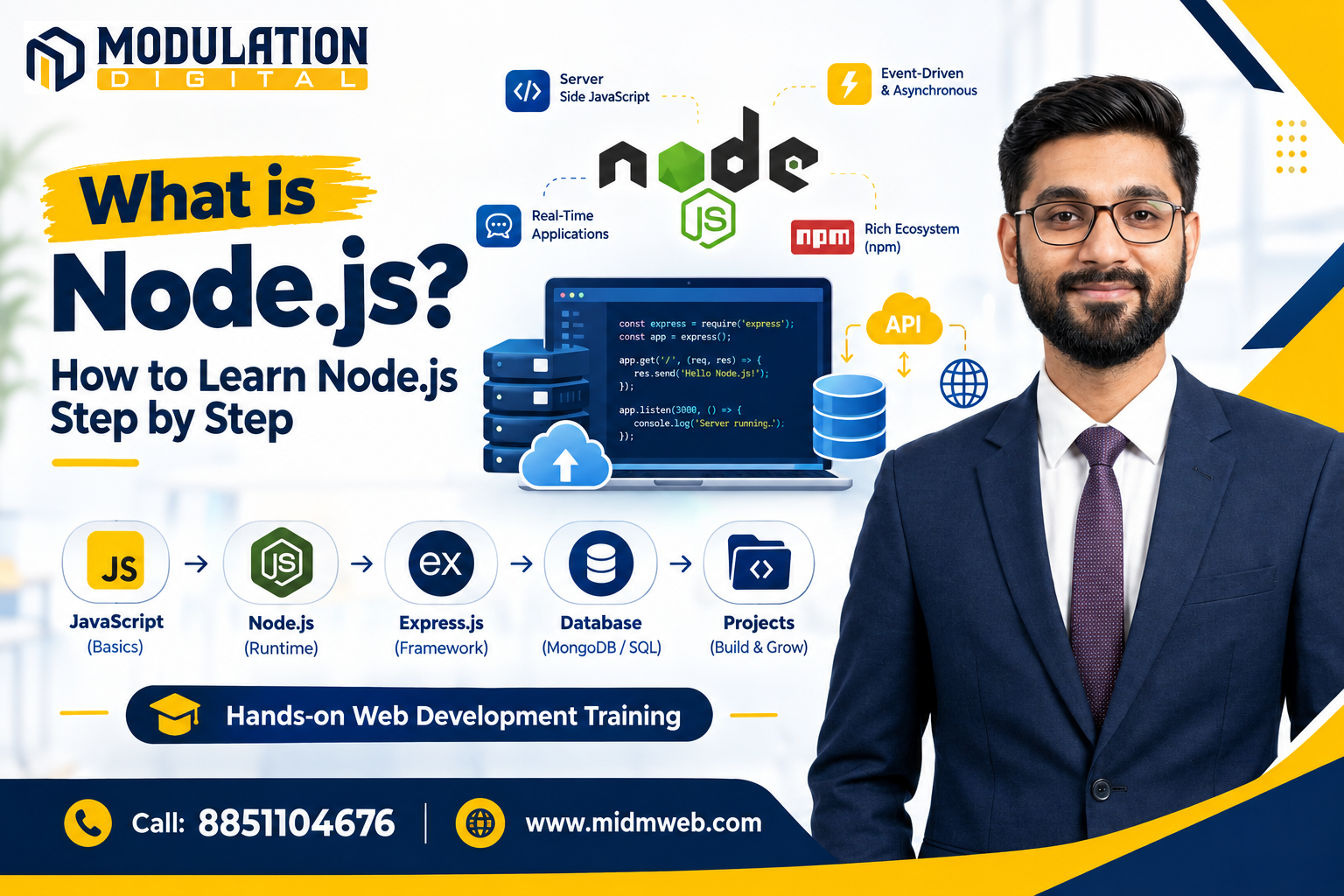
15. Once I understand marketing models like this, how do the underlying technologies that power tracking links and platforms actually work? That involves backend development concepts like Node.js. It's covered in detail in our other guide: What is Node.js and How to Learn It
Conclusion
Understanding what is affiliate marketing comes down to recognizing it as a trust-based, performance-driven model — one that rewards genuine audience value over aggressive promotion. Getting started requires patience and consistency, but it remains one of the more accessible entry points into digital marketing income. If you're ready to learn this properly, Modulation Digital, a trusted Best Digital Marketing Institute in Delhi, offers hands-on training under Praveen Kumar's guidance, helping students build the core skills that support long-term success. Reach out today to book a free counselling session.