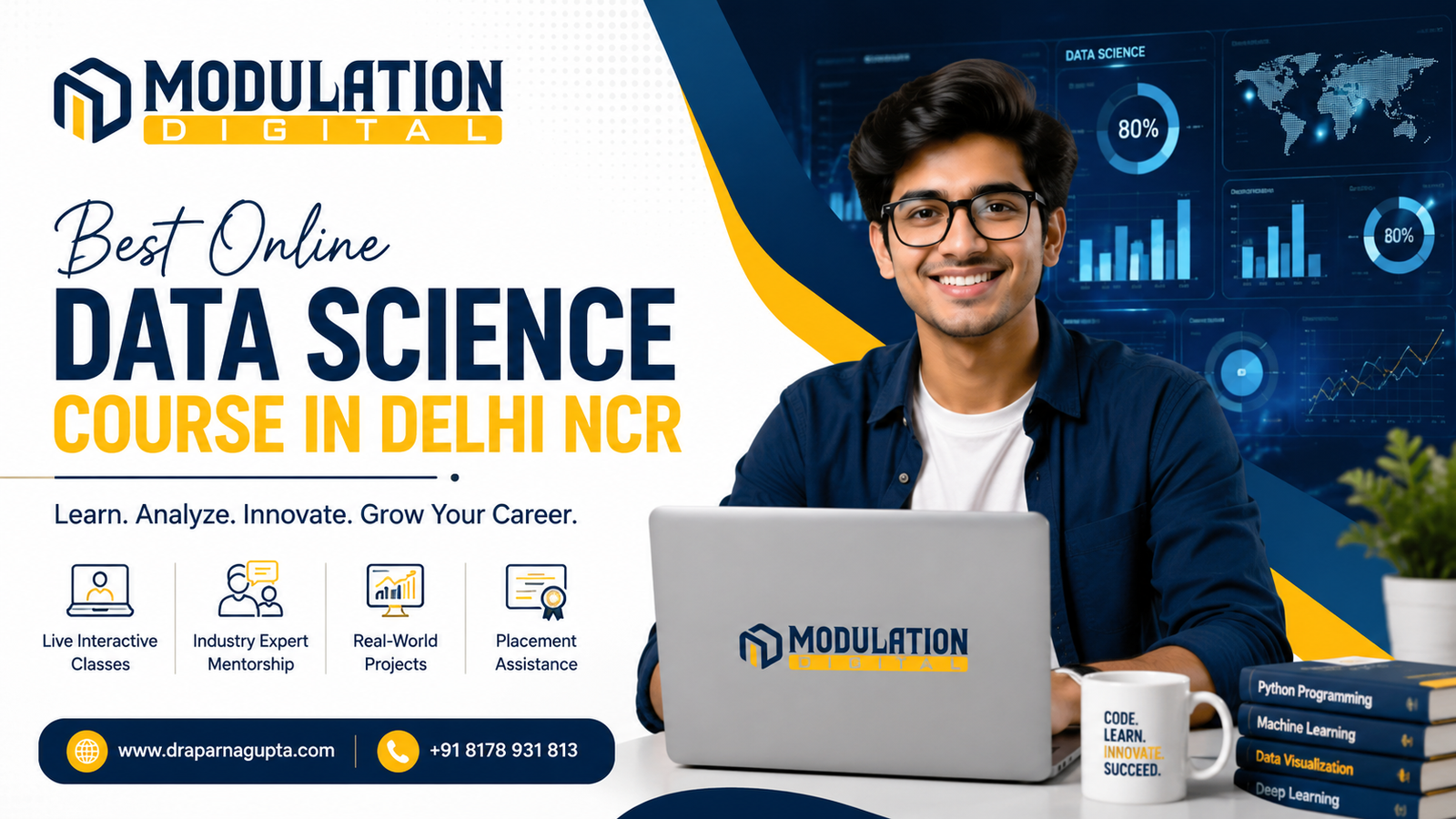
Is Data Science a Good Career Choice in 2026?
Yes, Data Science remains a promising career choice in 2026, particularly as businesses increase their use of AI, automation, and data-driven decision-making. According to the World Economic Forum’s Future of Jobs Report 2025, Big Data Specialists and AI and Machine Learning Specialists are among the fastest-growing roles through 2030. The report also highlights strong growth expectations for Data Analysts and Scientists, driven by rapid technology adoption.
For professionals in India, this creates opportunities across technology, banking, healthcare, e-commerce, fintech, and consulting. However, the career is becoming more skill-focused. Learning only Python or completing a certificate is unlikely to be enough. Employers increasingly look for practical knowledge of SQL, statistics, machine learning, data visualization, Python, and business analytics.
The field also requires continuous learning because AI tools and data technologies evolve quickly. Therefore, Data Science in 2026 can be a strong career option, but success depends on building practical skills, completing real-world projects, and continuously adapting to new technologies.
Expert-Designed Curriculum
A data scientist collects, cleans, and analyzes data to solve real business problems — forecasting sales, detecting fraud, personalizing recommendations, or optimizing operations. The role blends statistics, programming, and business thinking. On a typical day, this could mean writing Python code to clean messy datasets, building a machine learning model, or presenting findings to a non-technical team using a dashboard. It's less about complex math and more about asking the right questions and turning data into decisions leadership can act on.
What Topics Should You Cover in Data Science?
A good Data Science course should cover more than programming. It should help learners understand how raw information is collected, cleaned, analyzed, visualized, and converted into useful business insights.
1. Python for Data Science
Start with Python fundamentals and move into libraries such as NumPy, Pandas, and Matplotlib. Learners should practice handling datasets rather than only studying syntax.
2. Statistics and Probability
Cover descriptive statistics, probability, distributions, correlation, hypothesis testing, and regression basics. These concepts form the foundation for making reliable decisions from data.
3. SQL and Database Management
Students should learn SQL queries, joins, filtering, aggregation, subqueries, and database concepts to work with structured business data.
4. Data Cleaning and Exploratory Data Analysis
This section should focus on missing values, duplicates, inconsistent formats, outliers, feature preparation, and exploratory data analysis (EDA).
5. Machine Learning
Introduce supervised and unsupervised learning, including linear regression, logistic regression, decision trees, clustering, classification, and model evaluation.
6. Data Visualization
Learners should use tools such as Power BI, Tableau, and Python visualization libraries to create dashboards and communicate patterns clearly.
7. Real-World Projects
Finally, students should work with practical datasets and complete projects covering the entire data science workflow. Basic exposure to cloud platforms, model deployment, and communication of insights can further improve job readiness.
Data Scientist vs. Data Analyst: Key Differences
The difference is not simply about which role is “more advanced.” Both work with data, but they solve different types of problems. A Data Analyst usually focuses on understanding existing business data, while a Data Scientist uses data to build predictions and more complex analytical solutions.
| Comparison | Data Analyst | Data Scientist |
| Primary Goal | Understand business performance and identify patterns | Predict outcomes and develop data-driven solutions |
| Typical Question | “What happened, and why?” | “What could happen next?” |
| Main Data Work | Cleaning, organizing, analyzing, and reporting data | Preparing data, modeling it, and developing predictive systems |
| Key Tools | Excel, SQL, Power BI, Tableau | Python, SQL, Pandas, Scikit-learn, TensorFlow |
| Programming Level | Basic to intermediate programming is often sufficient | Strong programming ability is generally required |
| Statistics | Descriptive statistics and basic analytical methods | Probability, statistical modeling, experimentation, and advanced methods |
| Machine Learning | May use basic models or consume model outputs | Frequently develops, tests, and improves machine learning models |
| Typical Output | Reports, dashboards, KPIs, and business insights | Predictive models, algorithms, experiments, and analytical applications |
| Business Focus | Explains current and historical performance | Helps forecast trends and support future decisions |
| Common Industries | Marketing, finance, sales, operations, healthcare | Technology, fintech, e-commerce, healthcare, AI, and research |
| Career Starting Point | Often accessible to beginners with strong SQL and visualization skills | Usually requires deeper knowledge of programming, mathematics, statistics, and ML |
| Career Progression | Senior Analyst → BI Analyst → Analytics Manager | Data Scientist → Senior Data Scientist → ML/AI roles |
In simple terms: a Data Analyst turns existing data into actionable insights, while a Data Scientist uses data, statistics, and machine learning to build models that can help predict and solve future problems. For many beginners, starting with data analytics is a practical way to develop the SQL, visualization, and business understanding needed before moving toward data science.
What Is a Realistic Data Science Roadmap for Beginners?
A structured roadmap keeps beginners from getting overwhelmed by the field's breadth. A practical sequence looks like this: start with Python and SQL fundamentals, move into statistics and exploratory data analysis, then learn data visualization, followed by core machine learning algorithms. Once comfortable, add deep learning and NLP basics, and round it off with 3–4 real projects using public datasets. Building a portfolio alongside a GitHub profile matters as much as the learning itself — recruiters increasingly ask to see applied work, not just certificates.
How Much Do Data Scientists Earn in India?
Compensation varies by city, company size, and specialization, but data roles consistently rank among the better-paying tech careers for freshers and experienced professionals alike.
| Role | Experience Level | Approx. Annual Salary (India) |
| Data Analyst | 0–2 years | ₹4–7 LPA |
| Data Scientist | 0–2 years | ₹6–10 LPA |
| Data Scientist | 3–5 years | ₹10–18 LPA |
| Machine Learning Engineer | 2–5 years | ₹12–22 LPA |
| Senior Data Scientist | 5+ years | ₹20–35 LPA |
Figures are indicative industry ranges and vary by employer, location, and skill depth.
Why Learn Data Science at Modulation Digital?
Modulation Digital can be a practical option for learners comparing the best data science course in Delhi, particularly if they want their learning to extend beyond programming concepts and textbook exercises. The Data Science program covers areas such as Python, SQL, statistics, machine learning, data visualization, and artificial intelligence, giving students a broader understanding of how different parts of the data workflow connect.
The program is taught by Mr. Prem Kumar, whose professional background includes 6+ years of experience across Data Science, Machine Learning, Artificial Intelligence, and Business Analytics. His experience with tools and technologies such as Python, SQL, Power BI, Tableau, machine learning, and deep learning can help students understand where these skills fit into practical data problems.
Students can also evaluate the institute through its learning resources and publicly available feedback. Modulation Digital provides LMS access, practical projects, case-based learning, and internship and placement assistance, while its Google Business profile provides an additional source of learner feedback rather than relying only on information published by the institute.
The training can include:
- Python and SQL practice
- Statistics and data analysis
- Machine learning concepts
- Power BI and data visualization
- Practical datasets and projects
- Case-based problem solving
- LMS access for continued revision
- Classroom and online learning options
- Internship and placement assistance
For students researching a Data Science course in Delhi, these factors provide several practical points to compare — trainer experience, curriculum depth, hands-on learning, available resources, learning format, and feedback from previous learners.
FAQs
How long does it take to become a data scientist?
There is no fixed timeline, but a beginner can usually build job-ready fundamentals in 6–12 months with regular study, coding practice, and project work. Your starting knowledge and weekly learning hours can make the timeline shorter or longer.
Do I need a computer science or mathematics degree for data science?
No. A specific degree is not compulsory. Students and professionals from commerce, engineering, business, and other backgrounds can enter the field by developing the required skills in programming, statistics, databases, and data analysis.
What should I learn first for a data science career?
Begin with Python and basic statistics. Once you are comfortable with these, move to SQL, data analysis, visualization, and eventually machine learning.
Should beginners learn Python or R?
Python is generally the more practical starting point because it is widely used for data analysis, machine learning, automation, and AI. R remains useful for statistical analysis and research-oriented work.
Can someone from a non-technical background learn data science?
Yes. The transition is possible, but it requires patience. Non-technical learners should build their skills progressively instead of trying to jump directly into advanced machine learning.
Which tools are important for beginners?
A useful starting toolkit includes Python, SQL, Excel, Pandas, NumPy, and Power BI or Tableau. After developing these fundamentals, learners can move into machine learning libraries such as Scikit-learn.
What salary can a fresher expect after learning data science?
Entry-level salaries vary considerably according to location, employer, technical ability, and project experience. Instead of relying on a single salary figure, candidates should compare current job listings and develop skills that match the roles they want.
Are data science certifications useful?
A certification can demonstrate that you completed structured learning, but it should not be treated as proof of professional ability. Projects, problem-solving skills, technical knowledge, and a strong portfolio can make your profile more convincing to employers.
Which industries hire data science professionals?
Data science is used across banking, fintech, healthcare, e-commerce, technology, telecommunications, insurance, manufacturing, and consulting. The specific job title and technical requirements can differ between industries.
What is the difference between a data scientist and an AI engineer?
A data scientist generally works on extracting insights, developing analytical models, and using data to make predictions. An AI engineer is more focused on implementing, integrating, deploying, and maintaining AI or machine learning systems in applications.
Can I learn data science online and still prepare for employment?
Yes. Online learning can work well when it includes structured instruction, practical assignments, project work, mentor guidance, and career preparation. The important factor is not whether the training is online or offline, but whether you actually develop demonstrable skills.
Conclusion
Starting a career in Data Science does not happen by learning Python for a few weeks or collecting another certificate. It requires a step-by-step learning path, regular practice, and evidence that you can apply your knowledge to real data problems. For beginners, the sensible approach is to build a foundation in Python, SQL, statistics, data analysis, and visualization before moving into machine learning and more advanced areas.
You also do not need to master everything at once. Start with smaller datasets, build projects around problems that interest you, document your work, and gradually strengthen your technical skills. A strong portfolio can often demonstrate your ability more effectively than a list of completed courses.
If you are exploring how to start a career in data science, focus on becoming useful with data rather than simply completing a syllabus. Choose training that gives you practical exposure, experienced guidance, and opportunities to build projects. With consistent learning and hands-on experience, Data Science can become a realistic career path in 2026 — even if you are starting from a non-technical background.