Course Highlights at a Glance
| What You're Choosing | Details |
| Trainer | Roshan Jha — industry-experienced web design mentor |
| Format | Live sessions + recorded access, self-paced friendly |
| Duration | 3 to 6 months, depending on learning pace |
| Certification | Awarded on successful completion |
| Career support | Resume help, portfolio building, placement assistance |
| Curriculum scope | HTML5, CSS3, JavaScript, UI/UX, WordPress, SEO |
What Does the Curriculum Actually Cover?
The course is structured to take a complete beginner to job-ready, not just introduce isolated concepts:
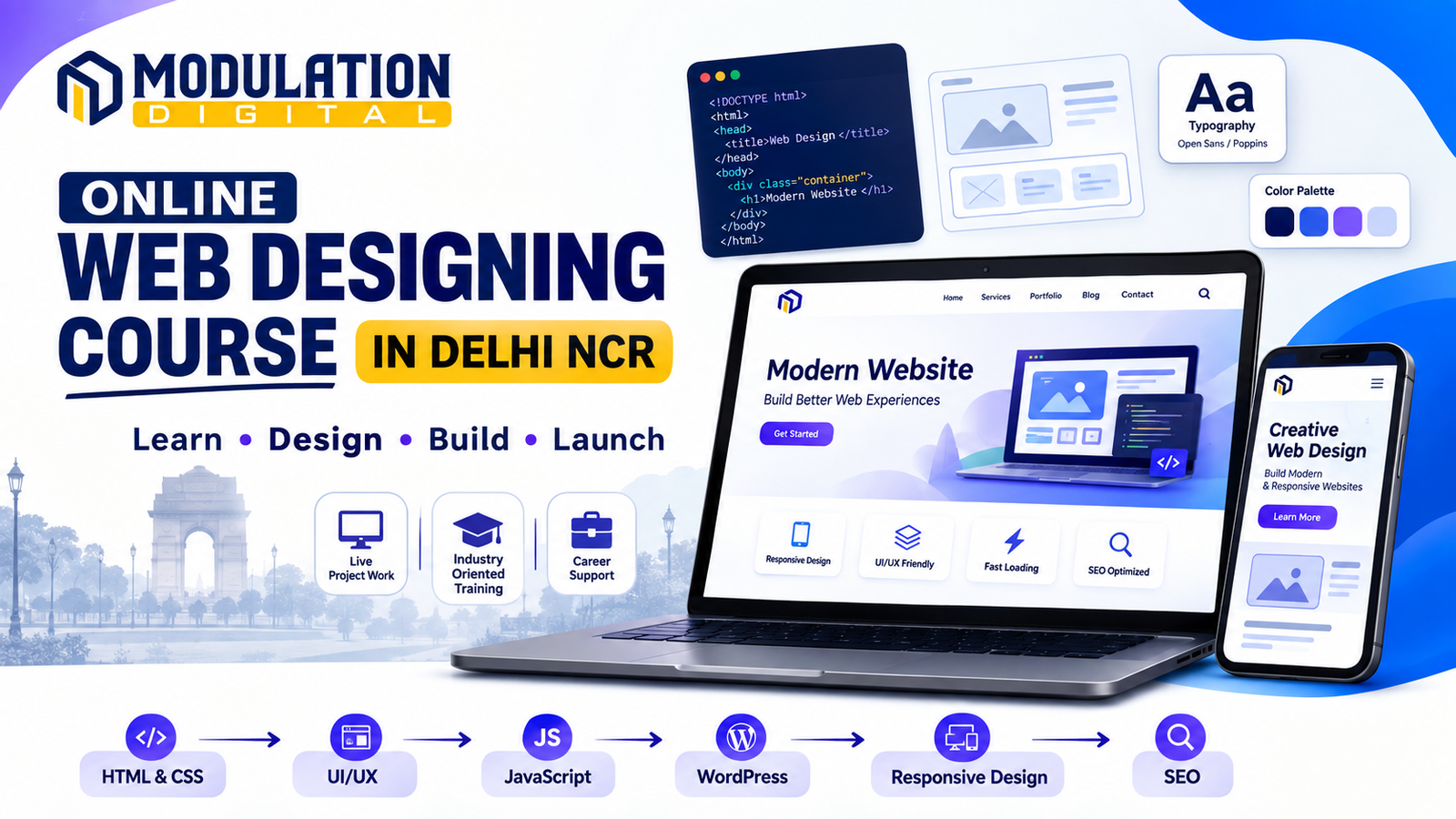
- HTML5 & CSS3 — website structure and styling, including Flexbox, CSS Grid, and animations
- JavaScript & jQuery — interactivity through functions, event handling, and DOM manipulation
- Bootstrap & Responsive Design — building layouts that work across every screen size
- UI/UX Design Principles — typography, color theory, and wireframing for user-friendly design
- WordPress Development — setting up sites, customizing themes, and using plugins
- SEO & Website Optimization — improving rankings and site speed
- Website Deployment & Hosting — publishing sites live and keeping them secure
Each topic builds on the last, so by the end you're not just familiar with tools — you can plan, build, and ship a working website independently.
Who Teaches the Course?
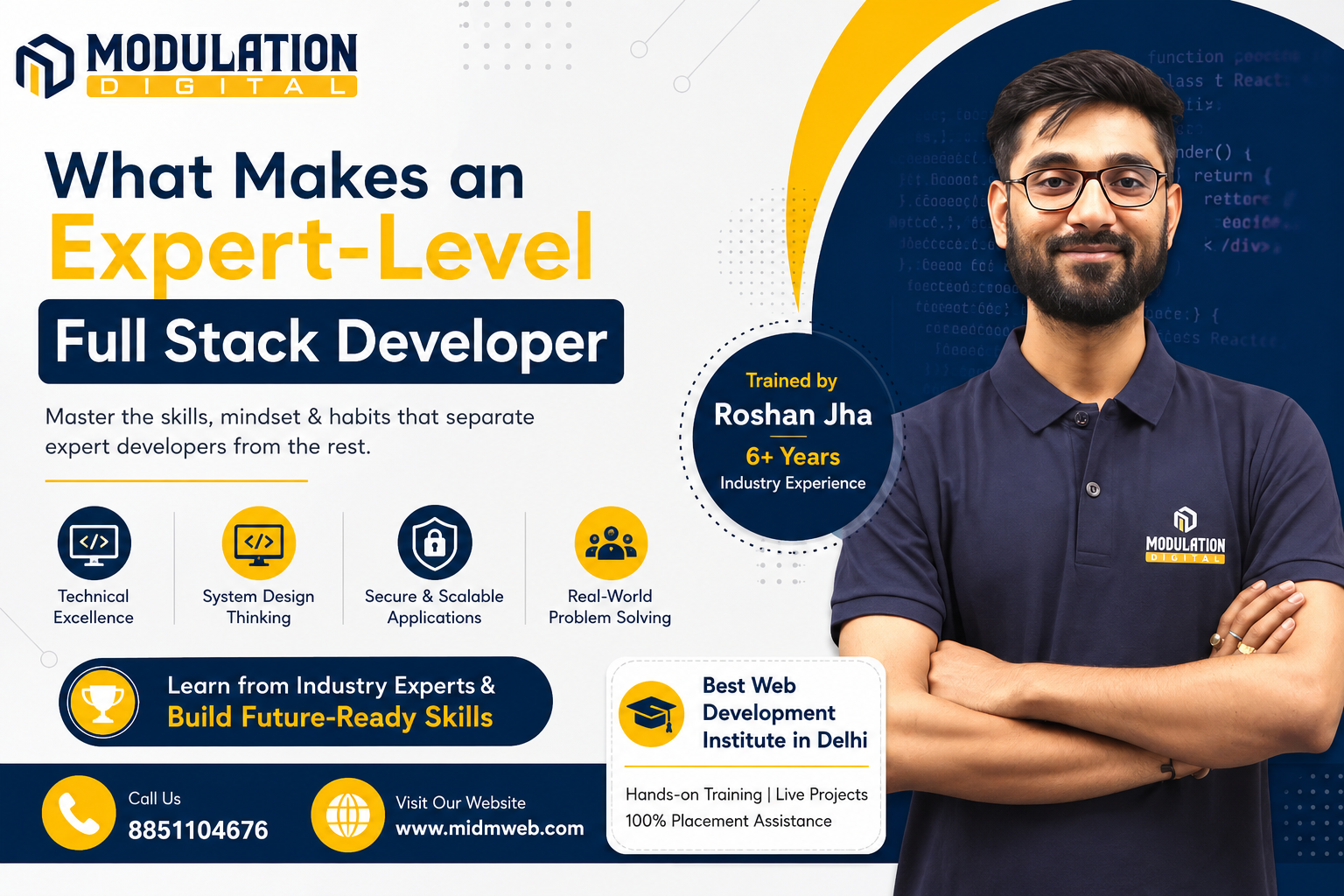
Roshan Jha leads web design training, bringing real project experience into the classroom rather than teaching purely from theory. Instruction focuses on the practical decisions designers actually make — why a layout works, how to structure a responsive grid, what makes an interface intuitive — instead of just walking through software menus.
Is the Training Hands-On?
Yes. Live project work is built into the course, not offered as a bonus. Students design and build functional websites, which does two things: it reinforces the concepts from each module, and it gives you a real portfolio to show employers or freelance clients — something a certificate alone can't do.
How Flexible Is the Learning Format?
The course is designed around real schedules, not the other way around. You can join live sessions or work through recorded material at your own pace, which matters if you're studying alongside a job, freelance work, or other commitments. This flexibility is one reason the course works equally well for students, working professionals, and business owners handling their own websites.
What Certification Do You Receive?
On completion, you're awarded a certification recognized within the industry — a credential that adds weight to a resume and signals you've completed structured, practical training rather than scattered self-study.
How Long Does the Course Take?
The course typically runs 3 to 6 months, depending on your pace and the format you choose. Faster learners moving through material quickly land on the shorter end; those balancing the course with other commitments often take the full range.
What Career Support Is Included?
Modulation Digital provides career-oriented support alongside technical training, so students can prepare for the transition from learning to applying for opportunities. The support includes resume preparation, portfolio development, mock interviews, and placement assistance.
Students can also receive guidance on how to present their projects and practical skills during interviews. For learners interested in freelancing, portfolio development can help them showcase their work to potential clients.
The institute also states that students have access to a network of 700+ placement partners, giving learners an additional channel to explore employment opportunities after training.
The focus is therefore not limited to completing the web designing syllabus. Students get support in building a portfolio, improving their job-application materials, practising interviews, and understanding how to present their skills professionally.
What Career Paths Open Up After the Course?
Skills from this course translate into several distinct roles:
- Web Designer — designs visually appealing, user-friendly websites
- UI/UX Designer — focuses on user-centered interface design
- Front-End Developer — builds the visual, interactive layer of a site
- WordPress Developer — builds and customizes WordPress-based sites
- Freelance Web Designer — runs an independent design practice
- SEO Specialist — optimizes websites for search visibility
This range means graduates aren't locked into one narrow job type — the skill set applies across agencies, in-house teams, and independent freelancing.
Why Choose Modulation Digital for Web Designing?
Choosing a web designing institute should be based on how you learn, what you practise, and what support you receive, rather than simply the course name. Modulation Digital's web designing program combines structured instruction with practical website-building work, giving learners an opportunity to apply concepts while they are learning them.
The course is led by Roshan Jha, with training covering areas such as HTML, CSS, JavaScript, responsive design, UI/UX,. Students can also work on practical projects that help them understand how a website moves from an initial layout to a functional online platform.
Other aspects of the learning experience include:
- Live project practice
- Live and recorded learning options
- Portfolio development
- Resume and interview guidance
- Placement assistance
For someone comparing an online web designing course in Delhi NCR, these factors can help determine whether the institute's teaching approach matches their learning style and career objectives. The best choice ultimately depends on the syllabus, practical exposure, trainer guidance, and the amount of effort you are willing to put into developing your skills.
FAQs
1. Who is this course designed for?
Students, working professionals, and business owners who want to learn web design from the ground up.
2. Do I need coding experience to join?
No. The course is structured to take complete beginners to an advanced skill level.
3. What is the course duration?
Typically 3 to 6 months, depending on your learning pace and chosen format.
4. Will I receive a certificate?
Yes, a certification is awarded after successful course completion.
5. What career options are available after the course?
Web Designer, UI/UX Designer, Front-End Developer, WordPress Developer, Freelance Web Designer, and SEO Specialist roles.
6. Does the course help freelancers specifically?
Yes, it covers portfolio development, client acquisition basics, and freelancing skills directly.
7. Is job placement assistance included?
Yes — resume building, portfolio support, and job placement guidance are part of the program.
8. What technologies are covered in the curriculum?
HTML5, CSS3, JavaScript, jQuery, Bootstrap, UI/UX design principles, WordPress, and SEO fundamentals.
9. Is the course available online?
Yes, with a mix of live sessions and recorded access for flexible, self-paced learning.
10. Who teaches the course?
Roshan Jha leads web design training with a focus on practical, project-based instruction.
11. Will I build real projects during the course?
Yes, live project work is a core part of training, giving you a portfolio-ready set of websites by completion.
12. How do I enroll?
Sign up directly through Modulation Digital's website to begin the course.
Conclusion
An online web designing course in Delhi NCR can be a practical starting point for anyone looking to develop creative and technical website-building skills. But the real value of a course depends on what you can actually do after completing it.
Learning HTML5, CSS3, JavaScript, responsive design, UI/UX, WordPress, SEO, and website deployment gives you a broader foundation instead of limiting your skills to one design tool. Practical projects can further help you understand how these concepts work together while giving you work to showcase in a portfolio.
Before choosing a course, compare the curriculum, trainer experience, project exposure, learning format, certification, and career support rather than judging an institute only by its promotional claims.