Is Digital Marketing a Good Career Choice in 2026?
Yes, digital marketing remains a strong career option in 2026, but the opportunity is becoming more performance-driven. The ET Brand Equity–Ipsos State of Digital Marketing in India 2025–26 reports that India's digital advertising spend reached ₹49,000 crore in FY2025, growing 20% year over year and accounting for 44% of total advertising expenditure. The report projects digital spending to reach approximately ₹56,400 crore in FY2026, increasing its share to 46%.
The hiring picture also gives Delhi-NCR relevance. Kraftshala's 2025 digital marketing hiring report found that Delhi-NCR accounted for 30% of entry-level digital marketing roles, the highest share among the cities covered. The region also continues to show strength in generalist, growth, and performance marketing positions.
This makes digital marketing attractive for people interested in SEO, paid advertising, social media, content, analytics, and freelancing. However, the field is changing quickly with AI, automation, privacy changes, and rising acquisition costs. So in 2026, simply knowing how to post on social media is not enough; marketers who can connect their work to traffic, leads, conversions, and revenue are likely to have the stronger career advantage.
What Does a Digital Marketer Actually Do?
A digital marketer plans and runs campaigns that get a brand found, followed, and chosen online. That can mean optimizing a website to rank on Google (SEO), running paid campaigns on Google Ads or Meta, managing social media content and engagement, writing content that converts, or tracking performance through analytics to see what's actually working. Most digital marketers specialize in one or two of these areas early on — SEO, paid ads, or social media are the most common starting points — before broadening into a more generalist or strategist role.
What Skills Do You Need to Become a Digital Marketer?
Digital marketing is not one single skill. It combines search, advertising, content, social media, analytics, and conversion-focused thinking. A good learning path should introduce these areas step by step so that beginners understand not only how to use each tool, but also how the different channels work together.
1. Search Engine Optimization (SEO)
Start with the fundamentals of SEO, including keyword research, search intent, on-page optimization, technical basics, content optimization, internal linking, and off-page strategies. The goal is to understand how websites can improve their organic visibility rather than simply adding keywords to a page.
2. Google Ads and Paid Search
Paid advertising teaches a different side of marketing. Students should learn how to structure campaigns, select keywords, write ad copy, understand bidding, monitor CTR and conversion rates, and evaluate whether advertising spend is producing meaningful results.
3. Meta Ads and Social Media Advertising
Facebook and Instagram advertising require an understanding of audiences, campaign objectives, creatives, targeting, budgets, and performance metrics. Learning how to test different audiences and creatives helps marketers make decisions based on campaign data.
4. Content Marketing
Content is used to attract audiences, answer their questions, build authority, and support conversions. Training should cover blog writing, content planning, keyword-focused content, social media content, and persuasive copywriting.
5. Social Media Marketing
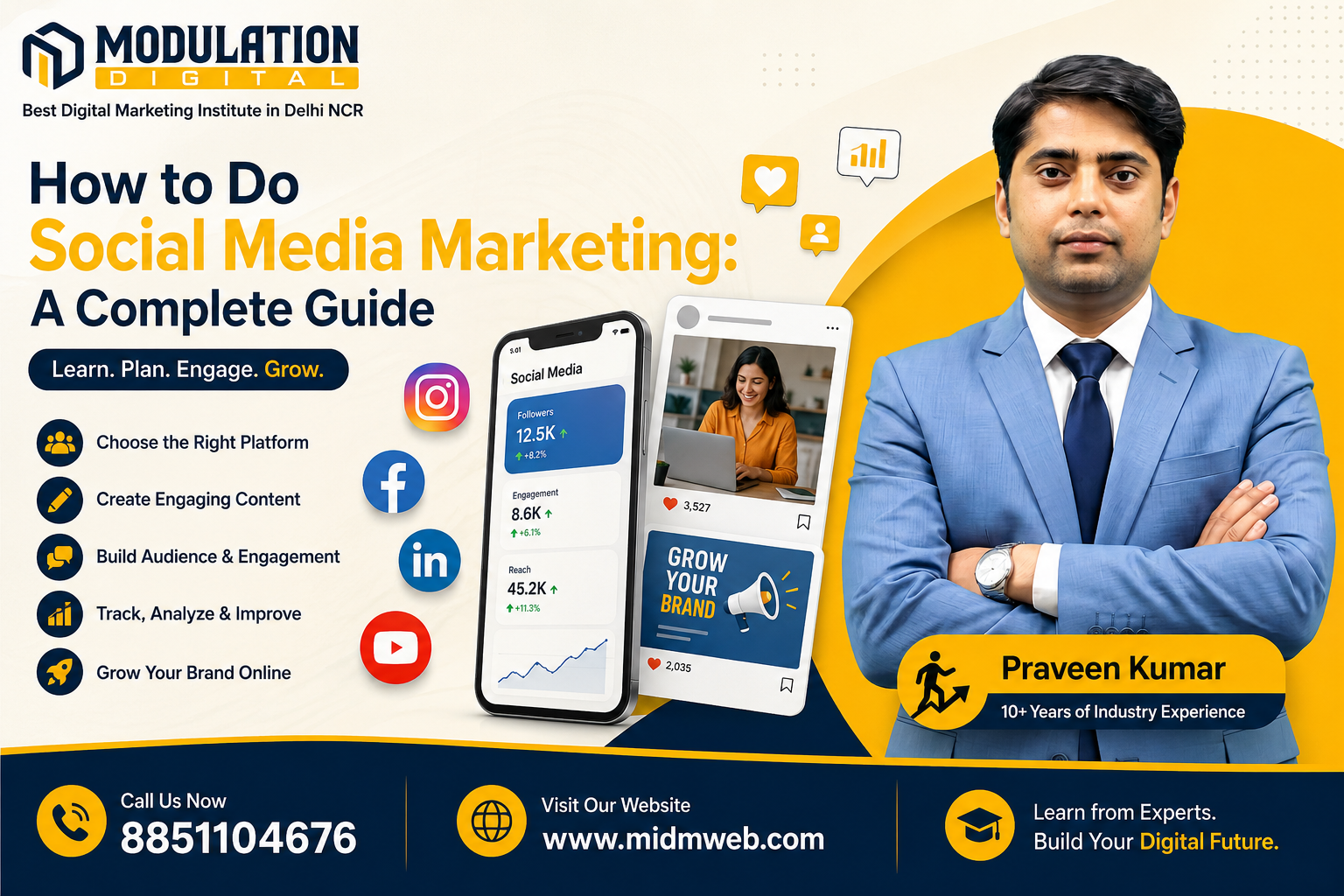
Social media marketing goes beyond publishing posts. Learners should understand content calendars, audience research, platform-specific content, engagement, community building, and performance analysis across platforms.
6. Google Analytics and Marketing Analytics
A marketer needs to know what happens after someone clicks an advertisement or visits a website. Google Analytics, Search Console, and advertising dashboards help track traffic, user behaviour, conversions, and campaign performance.
7. Email Marketing
Email remains useful for lead nurturing, customer communication, retention, and repeat sales. Learners can understand audience segmentation, campaign planning, email copy, automation, and basic performance metrics.
8. Conversion and Lead Generation
Digital marketing becomes more valuable when traffic turns into enquiries or sales. Students should understand landing pages, calls-to-action, lead forms, conversion tracking, and basic funnel optimization.
9. Practical Tools and Campaign Experience
At Modulation Digital, the learning approach can bring these areas together through practical exercises, campaign work, industry tools, and project-based learning. This gives beginners an opportunity to understand how SEO, paid advertising, content, social media, analytics, and lead generation contribute to one marketing strategy.
SEO vs. Social Media Marketing: Where Should You Start?
SEO and social media marketing both help businesses attract audiences, but they work differently. SEO is built around long-term search visibility, while social media focuses more on ongoing engagement, content distribution, and audience interaction. Your choice should depend on the type of work you enjoy and the results you want to create.
| Factor | SEO | Social Media Marketing |
| Main Objective | Improve organic search visibility | Build attention, engagement, and community |
| Primary Platforms | Google and other search engines | Instagram, Facebook, LinkedIn, YouTube, etc. |
| Content Style | Blogs, landing pages, guides, optimized website content | Reels, posts, stories, videos, carousels, social campaigns |
| Time to Results | Usually requires consistent effort over time | Engagement and reach can appear more quickly |
| Core Skills | Keyword research, on-page SEO, technical SEO, link building | Content planning, creative strategy, engagement, paid promotion |
| Measurement | Rankings, organic traffic, leads, conversions | Reach, engagement, followers, clicks, leads |
| Learning Style | More analytical and research-oriented | More creative and audience-focused |
| Long-Term Value | Strong content can continue attracting organic traffic | Requires regular content and audience interaction |
| Best Starting Point | Good for analytical thinkers | Good for creative and communication-focused learners |
For beginners, there is no universal winner. Social media can provide quicker feedback, while SEO teaches a deeper understanding of search behaviour and sustainable organic growth. Learning both eventually gives a digital marketer a stronger and more flexible skill set.
What Is a Realistic Digital Marketing Roadmap for Beginners?
Step 1: Learn Digital Marketing Fundamentals
Understand the digital marketing ecosystem, customer journey, target audience, marketing funnels, and how different channels work together.
Step 2: Build SEO Skills
Learn keyword research, search intent, on-page SEO, technical SEO basics, content optimization, internal linking, and off-page SEO.
Step 3: Learn Content and Social Media Marketing
Practise content planning, copywriting, social media strategy, Instagram/Facebook content, audience research, and engagement.
Step 4: Learn Google Ads and Meta Ads
Understand campaign objectives, targeting, keywords, ad creatives, bidding, budgets, conversion tracking, and performance metrics.
Step 5: Learn Analytics and Tracking
Use tools such as Google Analytics and Google Search Console to understand traffic, user behaviour, rankings, leads, and conversions.
Step 6: Work on Real Projects
Apply everything to a website, business, personal brand, or simulated campaign. Document your work and results.
Step 7: Build a Digital Marketing Portfolio
Create case studies showing what you worked on, what strategy you used, what changed, and what the results were.
Step 8: Choose Your Specialization
Once you understand the basics, specialize in SEO, performance marketing, social media, content marketing, email marketing, or analytics based on your strengths and career goals.
Step 9: Prepare for Jobs or Freelancing
Work on your resume, LinkedIn profile, portfolio, interview skills, and client communication. Start applying for entry-level roles or small freelance projects.
How Much Do Digital Marketers Earn in India?
Pay depends on specialization, city, and experience, but digital marketing offers a relatively fast path from fresher to a decent salary compared to some other entry-level tech-adjacent roles.
| Role | Experience Level | Approx. Annual Salary (India) |
| Digital Marketing Executive | 0–2 years | ₹2.5–5 LPA |
| SEO Specialist | 0–2 years | ₹3–6 LPA |
| Social Media Manager | 0–2 years | ₹3–6 LPA |
| Performance Marketer | 2–5 years | ₹6–12 LPA |
| Digital Marketing Manager | 5+ years | ₹12–22 LPA |
Figures are indicative industry ranges and vary by employer, city, and skill depth.
Why Learn Digital Marketing at Modulation Digital?
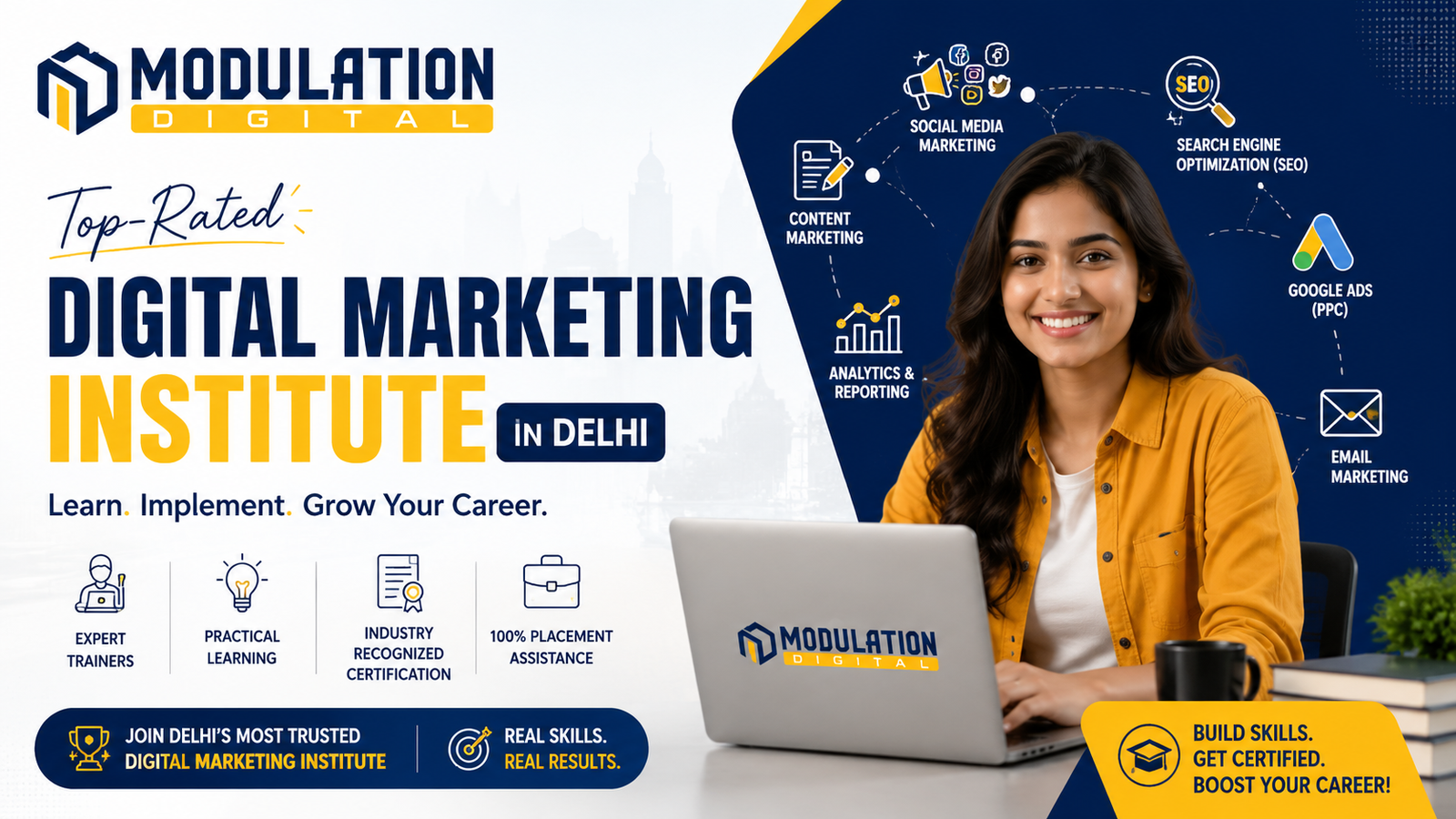
qModulation Digital can be a practical choice for learners comparing the best digital marketing course in Delhi, particularly those who want to learn marketing through actual campaign work rather than limiting their preparation to theory. The institute's digital marketing training covers major areas such as SEO, Google Ads, Meta Ads, social media marketing, content marketing, email marketing, analytics, lead generation, and conversion optimization, giving students exposure to multiple parts of the digital marketing ecosystem.
The program is guided by Praveen Kumar, who brings 10+ years of digital marketing industry experience. His professional experience includes SEO, paid advertising, website growth, campaign management, and performance-focused marketing, helping learners connect marketing concepts with practical business objectives. Modulation Digital also has a 4.7/5 rating from 641 Google reviews, giving prospective students an additional source of learner feedback when evaluating the institute. Together, trainer experience, practical exposure, and publicly available student reviews provide useful factors to consider when comparing digital marketing training options in Delhi.
Students can also choose a learning format and course level based on their requirements. Modulation Digital offers classroom, online, and e-learning options, allowing students to select a format that fits their schedule and preferred learning environment.
The training experience can include:
- SEO and keyword research
- Google Ads and PPC campaign management
- Meta Ads and social media advertising
- Content and social media marketing
- Google Analytics and performance tracking
- Lead generation and conversion strategies
- Email marketing fundamentals
- Live projects and practical assignments
- Real-world case studies
- Industry tools and campaign practice
- Trainer guidance and doubt-solving
- Resume and interview preparation
- Internship and placement assistance
Modulation Digital also provides learners with LMS access, practical project exposure, experienced trainers, and placement assistance, giving students resources they can continue using alongside their classroom or online training.
For someone searching for the best digital marketing course in Delhi, the important comparison should go beyond the course name. Trainer experience, practical campaign exposure, tools covered, project work, learning format, and career support are all worth evaluating before choosing a program.
FAQs
How long does it take to become a digital marketer?
There is no fixed timeline because it depends on your previous knowledge and how consistently you practise. With focused learning and practical assignments, many beginners can develop a foundation for entry-level digital marketing roles within 3–6 months.
Do I need a marketing degree to become a digital marketer?
No. A marketing degree is not mandatory. Employers often look at your practical knowledge, campaign experience, analytical ability, tool familiarity, and portfolio when evaluating an entry-level candidate.
Which digital marketing skill should I learn first?
SEO, social media marketing, or paid advertising can all be suitable starting points. Choose based on your interests, then gradually add other skills so you can understand how different marketing channels work together.
What salary can a digital marketing fresher expect in India?
Entry-level salaries vary depending on the company, city, specialization, and candidate's practical skills. SEO, performance marketing, social media, and paid advertising roles can have different salary ranges and growth paths.
Can digital marketing be a freelancing career?
Yes. Freelancing is one possible career path because businesses can hire specialists for services such as SEO, Google Ads, social media management, content marketing, and lead generation without employing a full-time marketer.
Which tools should a beginner digital marketer learn?
A useful starting toolkit includes Google Analytics, Google Search Console, Google Ads, Meta Ads Manager, keyword research tools, and SEO platforms. The right tools can vary according to your specialization.
Is digital marketing suitable for people without a technical background?
Yes. You do not need to be a programmer to begin. However, basic technical understanding can be useful for areas such as SEO, analytics, tracking, websites, and conversion optimization.
What is the difference between SEO and SEM?
SEO focuses on improving a website's unpaid visibility in search engines. SEM, commonly used for paid search marketing, involves advertising to gain visibility for relevant search queries, such as through Google Ads.
How do digital marketers measure campaign performance?
Performance is evaluated using metrics connected to the campaign objective. These can include organic traffic, leads, conversion rate, CPC, engagement, customer acquisition cost, and ROAS for paid campaigns.
Which industries hire digital marketers?
Digital marketers are needed across e-commerce, education, healthcare, finance, technology, real estate, D2C brands, agencies, hospitality, and startups. Any business trying to attract customers online can benefit from digital marketing.
Do digital marketing courses provide placement assistance?
Some structured programs offer additional career support such as resume development, interview preparation, internships, career guidance, and placement assistance. Students should check what is actually included before selecting a course.
Conclusion
Learning how to become a digital marketer is not about becoming an expert in every platform at once. The stronger approach is to build a foundation in SEO, content, social media, paid advertising, analytics, and conversion optimization, then develop deeper expertise in the areas that match your career goals.
Practical experience should be part of that process from the beginning. Working on a website, analysing search performance, creating a social media campaign, setting up an advertising experiment, or tracking leads can teach you lessons that simply watching tutorials cannot.
The digital marketing industry will continue to change as AI, automation, search behaviour, advertising platforms, and consumer expectations evolve. That means the most valuable marketers will be those who can learn new tools quickly and, more importantly, connect their activities to measurable business outcomes.
If you are starting in 2026, focus less on collecting certificates and more on building real skills, campaign experience, a measurable portfolio, and the ability to explain why a marketing strategy worked or failed. That combination can give you a stronger foundation for employment, freelancing, or eventually building your own digital marketing career.